
Consult Fees – Payment option per consult – Cash, PayID or bank transfer $2 discount – Card no discount
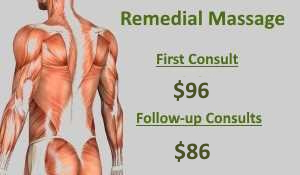
A Remedial Massage first consult takes up to 75 minutes and includes completing an intake form, discussing the primary reason for the consultation, postural analysis, developing a treatment plan, and providing treatment.
Follow-up consults for Remedial Massage are 60 minutes and include discussion about the primary reason for the consultation, review of the treatment plan, and the application of treatment.
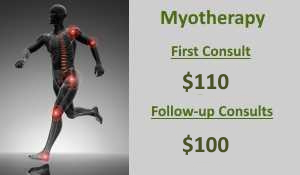
A Myotherapy first consult takes up to 90 minutes and includes completing an intake form, discussing the primary reason for the consultation, postural analysis, appropriate orthopaedic testing, developing a treatment plan, applying treatment, and reassessing the primary condition.
Follow-up consults for Myotherapy are 60 minutes and include discussion about the primary reason for the consultation, review of the treatment plan, application of treatment, and reassessment of the primary condition.
Myotherapy treatment sessions may involve a wide range of techniques, including basic and advanced dry needling, joint mobilisation, myofascial techniques, massage techniques, taping, and exercise prescription. All treatment techniques provided within a Myotherapy consult are included in the consult fee and do not attract any additional charges.
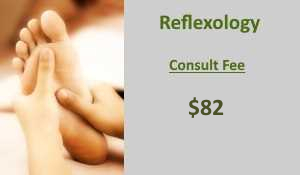
Reflexology consults are 60 minutes and include completing an intake form (for a first consult only), discussing the primary reason for the consultation, developing a treatment plan, and providing the treatment.
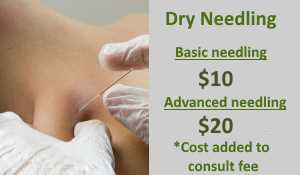
Dry needling is used as an adjunct to manual therapy and is not provided as a stand-alone treatment. Dry needling may be considered as part of the treatment plan for any consultation where clinically appropriate. Additional fees apply when dry needling is included in consultations other than Myotherapy consults, where it is included in the consultation fee.
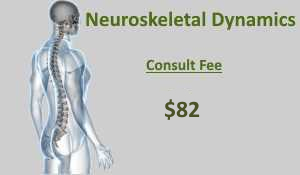
Consults for Neuroskeletal Dynamics (NSD) are 60 minutes and include completing an intake form (for a first consult only), discussing the primary reason for the consultation, developing a treatment plan, and providing the treatment.
Where possible, clients are encouraged to attend their appointment wearing light, comfortable clothing that does not restrict movement, such as activewear or other loose-fitting clothing. This helps with movement-based assessment and may allow some treatment techniques to be performed without the need to remove clothing. For certain assessments or treatment techniques, removal of some clothing may be preferred to allow appropriate access to the area being assessed or treated; however, this is always guided by the client’s comfort and preference. Appropriate draping techniques are used at all times. As a minimum, underwear such as briefs or underpants must remain on for both male and female clients. In some circumstances, underwear may need to be carefully moved aside to access areas such as the buttocks where this is clinically appropriate and has been included in the agreed treatment plan. All assessments and treatments are undertaken only with the agreement of both the client and practitioner. Either the client or practitioner may stop a particular technique, modify the treatment, or discontinue the session at any time if required.